
Rollins 3PL
Rollins Moving and Storage
Rollins Trucking

Backing Words With Actions

We don't just talk a good game, we play the game hard and win. At Rollins, we literally have thousands of success stories. You don't last for over 110 years if you do not perform time and time again for your customers. From around the corner to around the globe, Rollins has many dedicated and loyal customers. Just click on any of the stories to the left to learn more.

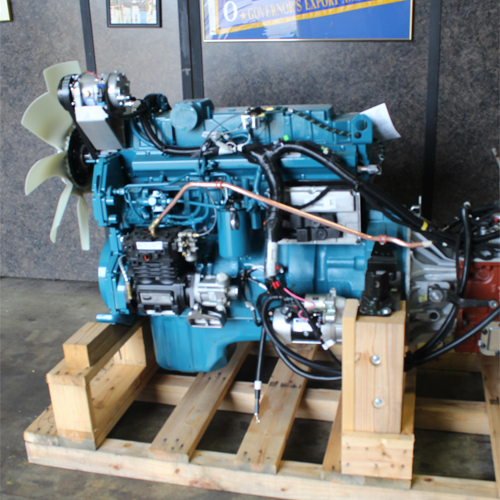
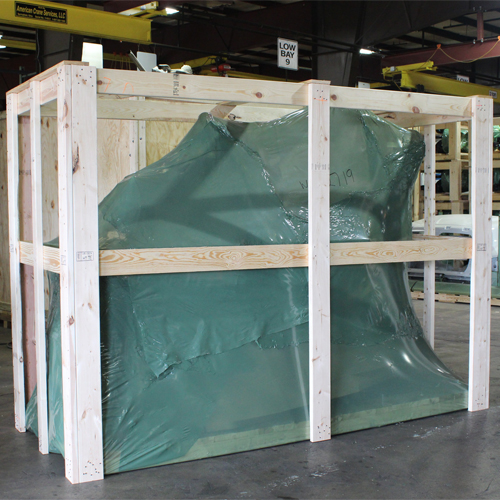
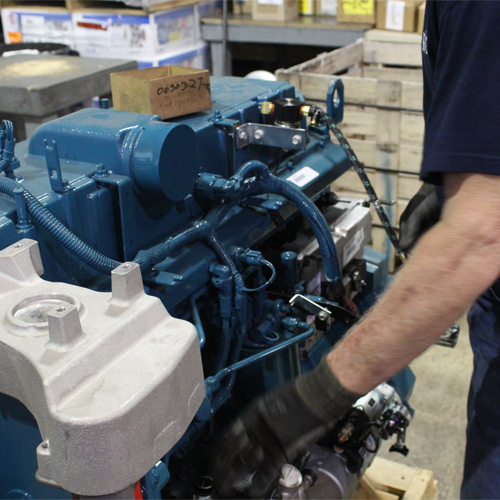
A crated engineIn late 2006, the Navistar Inc. plant located in Melrose Park, Illinois partnered with Diesel International to supply engines and spare parts to the Minsk Tractor Works in Belarus. Minsk Tractor Works is the second largest manufacturer of tractors in the world.

As an experienced engine and equipment crating company, Rollins was recommended by Navistar to crate and package their engines and spare parts.

Rollins was also tasked by Diesel International to receive and manage the engines and spare parts inventory. Rollins was then able to crate three engines per crate resulting in 21 engines and 21 spare part kits per container.

In all, since the beginning of the relationship, Rollins has crated, packaged and shipped for export, 107 containers or 2140 engines.

Download Case Study (PDF)

KitsIn early 1996, Rollins long standing export partner, Navistar, presented Rollins with a unique opportunity and challenge. Navistar had just procured an order from the Taiwan Military that required shipment of 4800 CKD (Completely Knocked Down) trucks delivered by sea containers. The delivery requirements were explicit in that Rollins was given 60 days to complete the first shipment. The Rollins purchasing team went to work placing PO’s on the Navistar supply base. Upon receipt and verification of incoming material, the Rollins export staff began picking, packing and designing crates that would be used to protect Navistar’s product. Forty-five days from receipt of order saw the first containers leave the Rollins facility headed to Taiwan.

The CKD trucks were crated and packed in kits that were designed by Rollins. All kits were designed to mirror each other to make unloading, inventory control and line sequencing easier for the customer. The wood crates were designed and approved to maximize the container space and weight restriction.

The scope of the project was to last for four years. The Rollins team completed the last shipment in a total of three years. Shipments consisted of 32 CKD units being shipped in 10 containers or a total of 1500 containers throughout the project.

Rollins shipped an average of 10 containers per week over the three year period with no late deliveries or customer issues.

Download Case Study (PDF)

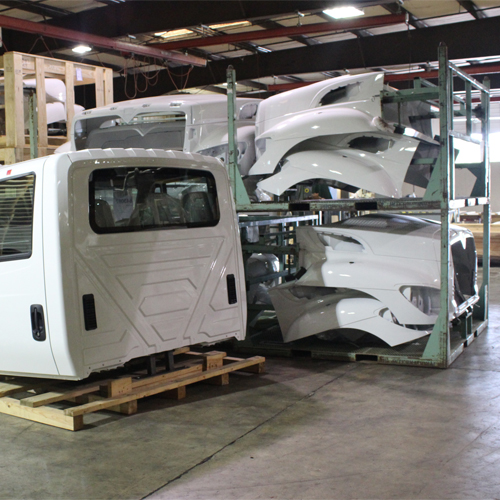
PackagingRollins was contracted by Dina from Mexico to crate and ship the sheet metal for 32- CKD (completely knocked down) and SKD (semi knocked down) truck cabs via tractor trailer.

Rollins reviewed the design that was provided by Dina and it was determined that there was room for improvement. Clyde DePuy, Operations Manager, looked at the current design and was able to design a package that allowed 72 total cabs to ship on one truck versus the original 32.

The result was that Dina realized a significant freight savings and also reduced their current damage percentage of 10% down to 0%. The savings for Dina was significant.

Their design called for 270 trailers with 32 cabs per trailer at a cost of $540,000. Rollins was able to reduce the number of trailers to 120 trailers with 72 cabs per trailer at a cost of $240,000. Dina saved $300,000 on this project!!!

Download Case Study (PDF)

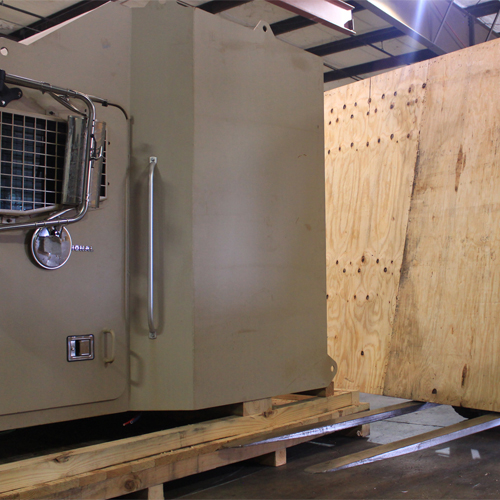
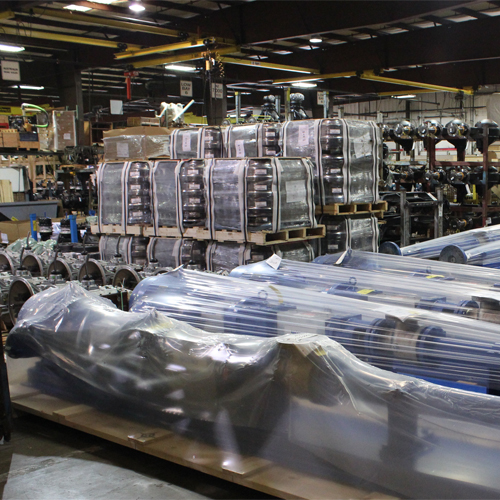
Crated military service partsIn late 2007, Rollins was approached to become a sub contractor to supply Service Parts for the new MRAP (Mine Resistant Ambush Protected) military truck. The prime contractor had a military contract in hand to build 5700 trucks and was in need of a supplier to handle the sub assemblies, CARC painting, various levels of preservation, crating and labels for the vehicles spare part program. Rollins quickly responded and transformed one of its facilities to accommodate this request. Overhead cranes were installed, tools and forklifts were purchased, crating jigs were constructed, heat treated lumber was ordered and employees were hired and trained. The initial order was for over 5000 rear axles, 3400 front axles, 1100 transfer cases and 1700 hoods. The rear axles and the hoods required Rollins to order all the parts to complete the subassembly work. All products were required to be CARC (Chemical Agent Resistant Coating) painted, and crated according to Mil Std 2073. Portions of the contract required a higher level of preservation resulting in “Flush & Slushing” the axles. This is filling the axle with a lubricant to help preserve the internals of the axle from corrosion. The Transfer Cases were required to be drained, set in a water vapor bag with two desiccant bags, sealed with a humidity indicator and crated with an inspection port on the side of the crate. These preservation methods are required by the contract in the supplementary instruction portion and defined in Mil Std 2073. Rollins was one of the first suppliers to assist the Prime in their efforts to provide MRAP Service Parts. Both Rollins and the Prime learned the Government’s programs and procedures together resulting in a product that the Troops in the field are thrilled with and most importantly-save lives.

Download Case Study (PDF)

inventoryIn June 2008, Rollins was asked to perform quarterly physical inventories at two facilities for a large defense contractor. The first was a 300,000 sq/ ft warehouse and the second, a 400,000 sq/ft automotive assembly plant.The warehouse receives and ships parts as well as supplies the Assembly Plant with materials on a JIT basis. Rollins agreed to the opportunity armed with a Sarbanes Oxley approved Physical Inventory process. Rollins met with the customer to determine their needs, goals and objectives to better understand the relationship between the warehouse and the plant. Conference calls were held six weeks prior to the inventory on a weekly basis and as the date drew closer, calls were held on a daily basis. The calls were a tool to help identify any issues which then resulted in action items that needed to be addressed prior to the count. The customer provided the staff to perform the physical counts and Rollins provided the management, physical reports and the inventory process. A team of Rollins Inventory Specialists arrived from Springfield, Ohio three days prior to the beginning of the inventory to train the onsite employees including the counting and data entry teams. Rollins met with the accounting staff at the plant to close the system and clear any issues that would possibly skew the count accuracy.

From there, over 50 teams scoured through the two facilities and counted in upwards of $72 Million dollars of inventory. A number of audits were performed at the customer’s request. The first, a Rollins requirement, was a bag audit. This means that a Rollins Auditor takes the completed bag of 25 tags to the location and audits 15% of the tags written. If there are count errors, another 15% audit is performed. Again, if there are more errors, a full bag audit is conducted. The next Rollins required audit was a systems audit. This audit reviews the perpetual vs. the actual numbers along with reviewing any potential data entry errors. From there, audit teams recount those materials in question. The third audit is a customer driven audit. Items were identified by the customer which required count verification. These were mainly higher value items which were audited and then reported. Finally, the customer’s bank audit team was on site. They performed spot counts and verified the count team’s numbers. The overall count accuracy was 98.9%. At the end of the inventory, an out briefing was conducted to highlight any issues or concerns from the inventory. Both the customer and Rollins identified opportunities to improve the process.

Rollins experienced auditors can help you count your warehouse or distribution center without extended and costly facility closures. Rollins can supplement your skilled teams in performing a swift and accurate count so you can quickly get back to business.

Download Case Study (PDF)

Kits In the age of inventory control and significant pressures to maintain quality, Rollins has a solution. With our ability to perform sub-assemblies, we first work with the customer and their Engineering Group to validate the accuracy of their Bill of Material (BOM). As many may know, an incorrect BOM can result in the ordering of incorrect materials, higher costs, extended lead times and excess inventory. Rollins has a number of Process Engineers on staff to work directly with your Engineering Group to ensure that the BOM is correct. By this we check the accuracy of the drawings with the parts required, check quantities, and suppliers. We can even check your contract with the supplier to be sure that the correct pricing is in place. Once the BOM is shown as correct, the parts are ordered from your supply base and received to our facility. Once all the parts are in house, a Process manual and check off sheet is developed, again in conjunction with your Engineering Group, to provide a step by step process to complete the sub assembly. Essentially, this quantifies that each piece is built the same way every time. All of these checks ensure that your final assembly is correct the first time with no errors and at the best cost.

Download Case Study (PDF)

Packaging needs are unique. Click here to have a Rollins Representative contact you within 24 hours - guaranteed! >>more

Free Quote Request


bbb61 facebook-61 twitter-61